
Artificial Intelligence’s Energy Threshold Electricity Demand, Efficiency Limits, and Urban Resilience


 May 25,2026
  By nabernaber21
Artificial intelligence, especially through generative AI and large-scale foundation models, is fundamentally transforming the energy profile of the digital economy. The distinctive aspect of this transformation is not merely the increase in total electricity consumption, but also the spatial concentration of consumption, it’s extremely rapid scaling, and its emergence within timeframes shorter than grid planning cycles. According to the International Energy Agency, data centers consumed approximately 415 TWh of electricity in 2024, accounting for around 1.5% of global electricity demand; this consumption is expected to rise to 945 TWh by 2030. This amount corresponds to a level exceeding the current annual electricity consumption of Japan. AI is regarded as the primary driver of this increase. (IEA, 2025)
This article advances the following central argument: The energy problem of artificial intelligence is not merely a matter of “producing more electricity”; it is simultaneously an issue of efficiency, grid flexibility, site selection, water management, hardware supply, carbon accounting, urban planning, and public interest. Energy production is becoming a critical constraint, yet the greatest obstacle facing AI is, in many cases, not generation capacity itself but “the timely, clean, reliable, and socially acceptable provision of access to power.” Therefore, sustainable artificial intelligence will be made possible not only through more efficient chips or larger renewable energy procurement agreements, but also through institutional and urban designs that govern computational demand.

Introduction: Artificial Intelligence Is Now an Energy Issue
For a long time, artificial intelligence was treated as a matter of software, algorithms, and data; however, by the mid-2020s, AI has also become an issue of heavy electricity infrastructure. Large language models, image and video generation systems, AI agents, personalized search, code generation, enterprise automation, and real-time inference services are expanding computational demand in terms of both scale and continuity. This demand differs from traditional web services: it requires not only data storage or content delivery, but also intensive matrix operations, accelerated GPU/TPU clusters, high-bandwidth memory, liquid cooling, and large-scale electricity connections.
For this reason, the relationship between AI and energy is bidirectional. On the one hand, AI models and the data centers that run them consume electricity, water, land, and hardware resources. On the other hand, AI carries the potential to make the energy system itself more efficient in areas such as electricity grid optimization, renewable energy forecasting, transmission line capacity enhancement, maintenance planning, and industrial efficiency. The International Energy Agency notes that AI-based grid tools can accelerate fault detection, reduce outage durations, and extract additional capacity from existing transmission lines; the same report also highlights the potential of AI-supported applications to reduce energy costs in industry. (IEA, 2025)
The fundamental issue here is more complex than the question, “Does AI consume energy?” Of course it does; however, the real issue concerns how much of this consumption generates economic and social value, how much constitutes unnecessary computational expansion, which regions experience grid bottlenecks as a result, which electricity mix supplies this demand, how much water is consumed, and whether efficiency gains actually reduce overall demand.
How Does Artificial Intelligence Affect Energy Consumption?
The energy impact of artificial intelligence emerges across three main layers: model training, model inference, and data center infrastructure. The training stage involves the use of long-duration accelerator clusters to train large models with billions or trillions of parameters. The inference stage, by contrast, includes responding to every user query, API call, image generation request, agent step, or enterprise automation request. The third layer, infrastructure, encompasses not only servers but also cooling, power distribution, backup systems, networking, storage, and building systems.
Academic literature drew early attention to the energy costs of large models. The study by Emma Strubell, Ananya Ganesh, and Andrew McCallum on NLP models demonstrated that modern deep learning generates not only financial but also environmental costs, and that hyperparameter search and large-scale training processes in particular increase energy consumption. (Strubell, Ganesh, & McCallum, 2019) David Patterson and colleagues, meanwhile, argued that factors such as model architecture, data center efficiency, processor selection, and the carbon intensity of the electricity grid can alter the carbon footprint of large neural network training by orders of magnitude; they maintained that selecting the right model, hardware, and data center can reduce carbon impacts by factors of 100 to 1000. (Patterson et al., 2021)
Nevertheless, the critical shift in current energy debates concerns the transition from training to inference. A foundation model is trained once, but it may be executed millions or billions of times. As AI products become embedded in search engines, office software, code editors, customer services, educational platforms, and smart devices, total energy consumption becomes determined less by the one-time cost of training and more by the scale of continuous use. The International Energy Agency’s 2026 assessment also states that “power consumption per AI task is rapidly declining,” yet because AI adoption is expanding and energy-intensive agent applications are growing, the electricity consumption of AI-focused data centers could triple by 2030. (IEA, 2026)
At this point, the energy problem is no longer merely an issue of “consumption per model,” but rather one of “total demand per system.” Making a single query cheaper may increase the total number of queries. This situation resembles the rebound effect, or the Jevons paradox, in economics literature: as the unit efficiency of a technology improves, the cost of use declines, usage volume expands, and total resource consumption may increase contrary to expectations. In the context of AI, this danger is especially significant because efficient models may expand total electricity demand by bringing AI into more products, more workflows, and more users. The study by Alexandra Sasha Luccioni and colleagues examining the Jevons paradox in the context of AI emphasizes that efficiency gains alone do not guarantee sustainability and must be addressed together with demand management and life-cycle accounting. (Alexandra Sasha, Strubell, & Crawford, 2025)
Data Centers: Small Global Share, Large Local Impact
At the global scale, the share of data centers in total electricity consumption remains smaller than that of some heavy industrial sectors. However, this statement may be misleading because data center loads are spatially concentrated to an extraordinary degree. According to the International Energy Agency, data centers consumed approximately 1.5% of global electricity in 2024, yet this consumption was concentrated in the United States, China, and Europe; the United States alone accounted for approximately 45% of global data center electricity consumption. The same report states that data center electricity consumption has grown by roughly 12% annually since 2017, meaning it has increased more than four times faster than total electricity consumption. (IEA, 2025)
At the local level, the pressure is far more pronounced. The International Energy Agency notes that a typical AI-focused data center can consume electricity equivalent to that used by 100,000 households, while the largest facilities being constructed today may reach 20 times that level. This scale moves data centers beyond the category of traditional office or commercial consumers and closer to energy-intensive industrial users such as aluminum smelters. However, the distinguishing feature of data centers is that they are deployed much more rapidly, cluster around specific network nodes, and simultaneously expand requirements for grid connections, transformers, cooling, and backup power systems. (IEA, 2025)

The United States provides a clear example of this trend. According to the 2024 report of Lawrence Berkeley National Laboratory, electricity consumption by U.S. data centers increased from approximately 58 TWh in 2014 to 176 TWh in 2023, representing 4.4% of total U.S. electricity consumption. The same report projects that by 2028, U.S. data center consumption could rise to between 325 and 580 TWh, corresponding to approximately 6.7% to 12% of total U.S. electricity consumption. (Berkeley Lab, 2024)
The reason for this increase is not merely “the growth of the internet.” During the 2010s, data center energy consumption remained relatively stable due to cloud migration, higher server utilization rates, cooling efficiency, and hyperscale facilities. Eric Masanet and colleagues showed that global data center electricity use in 2018 amounted to approximately 205 TWh, or around 1% of global electricity consumption, and that despite major increases in service demand, efficiency gains had limited total energy growth. (Masanet, Shehabi, Lei, Smith, & Koomey, 2020) However, the widespread adoption of AI accelerators indicates that the limits of this efficiency era are being reached. The Lawrence Berkeley National Laboratory report identifies the growth of GPU-accelerated servers and the increasing share of AI hardware within data center infrastructure as one of the principal causes of the new rise in U.S. data center electricity consumption. (Berkeley Lab, 2024)
Can Artificial Intelligence Be Made More Efficient?
Yes, but “efficiency” must be understood as a multilayered concept. The first layer is model efficiency: smaller models, specialized models, sparsely activated architectures, knowledge distillation, quantization, pruning, low-precision computation, and selecting the appropriate model for each task can reduce energy intensity. The second layer is hardware efficiency: instead of general-purpose processors, AI accelerators, high-bandwidth memory, more efficient interconnects, and energy-aware compilers are used. The third layer is operational efficiency: data center site selection, cooling architecture, workload scheduling, carbon awareness, flexible operation according to grid signals, and capacity utilization rates all fall within this domain.
The study by David Patterson and colleagues states that large but sparsely activated networks can consume far less energy than dense models while maintaining the same accuracy level; furthermore, cloud data centers may be approximately 1.4–2 times more energy efficient than conventional data centers, while ML-focused accelerators may be approximately 2–5 times more energy efficient than off-the-shelf systems. The same study also emphasizes that geographic location is critical, noting that carbon intensity can vary by factors of 5–10 even within the same country. (Patterson et al., 2021)
For this reason, the “Green AI” approach is not merely a technical recommendation but a call for a transformation in scientific evaluation criteria. Roy Schwartz, Jesse Dodge, Noah A. Smith, and Oren Etzioni proposed that AI research should report not only accuracy or performance but also computational cost and energy efficiency. This approach seeks to redefine academic success not as achieving the highest accuracy with the largest model, but as solving a given task with acceptable accuracy while using the fewest possible resources. (Schwartz, Dodge, Dodge, Smith, & Etzioni, 2019)
Nevertheless, efficiency alone is insufficient. Even if energy consumption per AI task declines, total energy consumption will continue to grow if overall usage volume increases more rapidly. The International Energy Agency’s 2026 assessment points precisely to this tension: power consumption per task is declining rapidly, yet data center electricity demand is expected to double by 2030 because more people are using AI and more energy-intensive agent systems are becoming widespread. (IEA, 2026) Therefore, sustainable AI requires not only “model efficiency” but also “demand governance”: avoiding the use of large models in every workflow, deploying smaller models for low-risk tasks, limiting unnecessary automated calls, implementing caching, optimizing output length and agent steps, incorporating energy cost into performance metrics, and making enterprise AI usage carbon-aware.

Can the Energy Pressure Be Managed?
It can be managed; however, it will not manage itself automatically. Manageability depends on integrating technical efficiency with energy system planning. The first condition is transparency. Today, many companies do not separately report AI and non-AI workloads, and data on electricity consumption, water usage, carbon intensity, and hardware life cycles at the data center level remain limited. The 2026 study by Alex de Vries-Gao states that calculating the carbon and water footprints of AI systems is difficult because data center operators do not adequately disclose the necessary inputs. According to the study, corporate environmental disclosures allow only approximate assessments of the impacts of AI workloads; therefore, more detailed policy-based disclosure requirements are necessary. (de Vries-Gao, 2026)
The European Commission has taken one of the first institutional steps in this area. Under the Energy Efficiency Directive, the Commission introduced monitoring and reporting obligations regarding the energy performance and water footprint of data centers; it requires data center operators to report information on energy consumption, water use, and performance indicators to a European database. The Commission also emphasizes on its policy page that data centers consumed approximately 1.5% of global electricity in 2024 and could rise to 945 TWh by 2030. (European Commission, 2025)
The second condition is grid integration. Data centers should not be designed solely as traditional baseload consumers, but also as flexible consumers for certain workloads. Model training, batch data processing, hyperparameter search, and some low-priority inference tasks can be shifted over time. By contrast, applications such as real-time financial transactions, healthcare, security, or customer services have low tolerance for latency. This distinction is important from a policy perspective: rather than placing all data center loads into the same category, flexible and inflexible AI workloads should be managed separately.
The International Energy Agency identifies locating new data centers in regions with abundant energy and grid capacity, along with more flexible operation of servers or on-site generation and battery assets, among the principal risk mitigation strategies. According to the report, constructing new transmission lines in advanced economies may take four to eight years, while waiting times for critical components such as transformers and cables have doubled over the last three years. Consequently, meeting data center demand solely by “building more power plants” may prove inadequate because the relevant time scales do not align. (IEA, 2025)
The third condition is clean and additional electricity supply. Technology companies play a significant role in renewable energy procurement agreements; the International Energy Agency states that approximately 40% of corporate renewable energy purchase agreements signed in 2025 were made by the technology sector. At the same time, options such as nuclear energy, geothermal energy, long-duration storage, and on-site gas generation are also under discussion. However, the critical distinction here lies between “purchasing renewable certificates” and “providing additional and reliable clean energy within the same region and time frame.” Managing AI’s energy pressure therefore requires hourly carbon accounting, the principle of additional capacity, and investments that reduce grid bottlenecks. (IEA, 2026)
The fourth condition is water management. Discussions on AI and energy are often framed in terms of electricity, yet water use for cooling is also becoming critical. Shao-Yuan Li and colleagues estimate that the water footprint of AI systems often remains invisible and that AI demand could correspond to billions of cubic meters of water withdrawals by 2027. This finding demonstrates that, especially in arid or water-stressed regions, data center site selection cannot be based solely on electricity prices. (Li, Yang, Islam, & Ren, 2025)
Is Energy Production the Greatest Obstacle Facing Artificial Intelligence?
Partially yes, but a more accurate formulation is this: the greatest physical obstacle facing artificial intelligence is “the inability to scale electricity generation, grid connection, power equipment, cooling, and social acceptance simultaneously.” Energy production lies at the center of this package, yet it is not the sole determining factor.
For a data center project, sufficient annual electricity generation may theoretically exist; however, if the local grid lacks transformer capacity, if transmission lines are delayed, if gas turbine delivery schedules extend beyond 2030, if water use permits cannot be obtained, or if local communities fear that costs will be passed on to consumers, the project will still be delayed. The International Energy Agency states that approximately 20% of planned data center projects could face delays if grid and energy-sector risks are not addressed. (IEA, 2025)
For this reason, energy production is a “necessary but insufficient” condition. Electricity supply must increase for AI to continue growing; however, what matters is where, when, with what carbon intensity, at what infrastructure cost, and through whose electricity bills this supply is provided. Furthermore, other obstacles facing AI development should not be underestimated: advanced chip supply, high-bandwidth memory, data access, security and copyright regulations, model reliability, skilled labor, capital costs, and social legitimacy are all at least as strategic as electricity itself. Yet energy remains the most physical and the most local among these constraints; software can scale digitally, but transformers, transmission lines, cooling water, and generation capacity must be physically constructed in the real world.
At this point, the future of AI cannot be considered separately from the future of the energy system. Regions capable of providing abundant, affordable, clean, and reliable electricity will gain advantages in attracting AI investment. By contrast, regions with congested grids, slow permitting processes, fragile electricity prices, or high water stress may become restrictive environments for AI infrastructure. This transforms AI competition not only into a contest among software companies, but also into competition among regions with strong energy policies and infrastructure capacity.
Artificial intelligence-powered chatbots and virtual assistants enhance the spectator experience at the Paris 2024 Olympics. These assistants answer spectators’ questions, provide guidance, and offer personalized content recommendations. Additionally, security teams use artificial intelligence algorithms to analyze movements within the stadium and optimize crowd management and security operations.
In the video above, you can watch Kim Woojin, the Korean athlete who won the Gold Medal in Olympic Archery at the Paris 2024 Olympics, train with an AI-powered robot.
Will Cities Be Able to Tolerate the Energy Consumed by Artificial Intelligence?
The general answer is this: some cities and regions may be able to tolerate it, but most cities were not designed for electricity demand at this scale, speed, and intensity. Modern urban grids have generally evolved to support distributed loads such as residential demand, commerce, light industry, transportation electrification, and climate control systems. AI data centers, by contrast, may demand hundreds of megawatts of load at a single point. In terms of urban infrastructure, this resembles a heavy industrial facility more than a shopping mall, office campus, or residential neighborhood.
The case of Ireland is instructive. According to the Central Statistics Office, the share of data centers in total metered electricity consumption increased from 5% in 2015 to 21% in 2023; in the same year, urban households accounted for 18% of total metered consumption. In other words, as of 2023, data centers in Ireland consumed more metered electricity than urban households. (Central Statistics Office, 2024) This picture demonstrates how data center concentration is reshaping national energy planning, climate targets, and local grid investments.
The example of Singapore presents a different but complementary case. Due to its tropical climate, high humidity, and limited land area, cooling loads are substantial. According to the Infocomm Media Development Authority, the data center sector accounts for approximately 7% of the country’s electricity consumption, and this share is expected to rise to 12% by 2030; cooling can constitute a very large portion of facility consumption in tropical climates. (Infocomm Media Development Authority, 2026) This raises questions not only about cities’ electricity capacity, but also about their suitability for AI infrastructure in terms of climate conditions and cooling technologies.
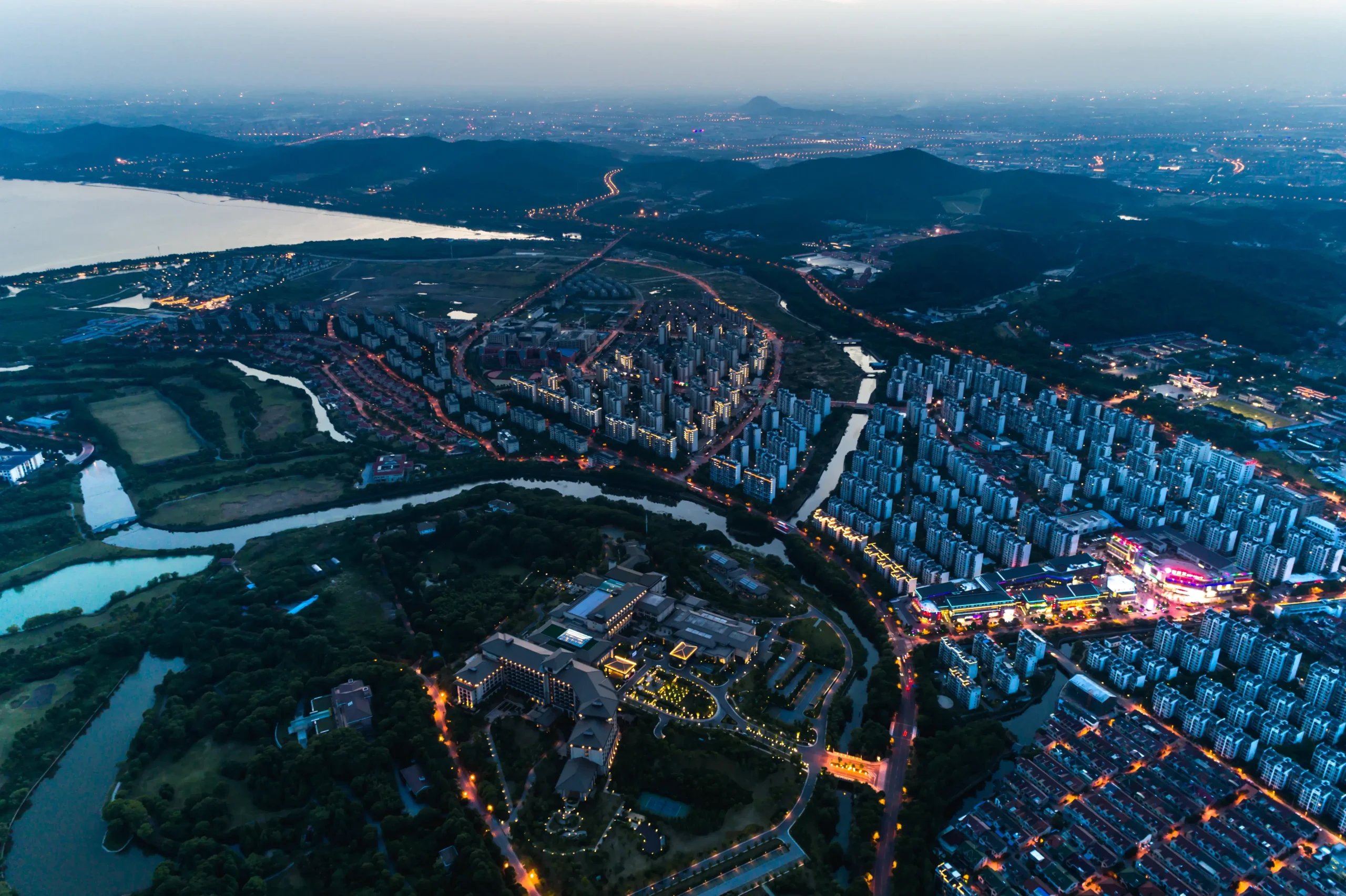
The case of Northern Virginia in the United States also demonstrates the grid effects of concentration. According to the U.S. Energy Information Administration, summer peak load in PJM’s Dominion region reached 23,905 MW in 2025, representing a 23% increase compared with 2019; winter peak load rose to 25,413 MW in the 2025–26 season, an increase of 45% compared with 2019–20. The same source states that PJM expects summer peak load in the Dominion region to grow at an average annual rate of 5.4% over the next decade. (U.S. Energy Information Administration, 2026) These increases demonstrate that data center clustering creates not only annual energy demand issues, but also challenges related to peak demand and grid reliability.
Therefore, the answer to the question “Were cities designed for this?” is, in most cases, no. Some regions are now being retrofitted to host data center clusters, with solutions such as new transmission lines, substations, renewable energy interconnections, battery systems, water recycling, and waste heat utilization being introduced. However, if this adaptation is not carefully planned, the costs may ultimately be passed on to households, small businesses, or the local environment. For this reason, AI data centers should be regulated not only as “critical digital infrastructure,” but also as “major energy consumers” within urban planning frameworks.
Policy and Design Principles for Reducing AI Energy Pressure
The first principle for sustainable AI infrastructure is measurability. Sound public policy cannot be established unless electricity consumption, PUE (Power Usage Effectiveness), WUE (Water Usage Effectiveness), carbon intensity, hourly energy sources, hardware life-cycle emissions, and the distinction between AI and non-AI workloads are reported at the data center level. The European Commission’s data center reporting system represents an important starting point in this direction, but more globally comparable and auditable standards are still needed. (European Commission, 2025)
The second principle is the principle of “not running the largest model everywhere.” Institutions should classify tasks according to their level of risk and complexity; if small models, local models, cached responses, or rule-based systems are sufficient, they should not rely on large foundation models. This approach reduces not only energy costs, but also latency, data security risks, and operational expenses.
The third principle is carbon- and grid-aware scheduling. Tasks with temporal flexibility, such as training and batch inference, can be shifted to periods when renewable generation is high, grid carbon intensity is low, and regional demand is weaker. This approach could transform data centers from passive consumers into actors that contribute to grid flexibility.
The fourth principle is site selection based on energy, water, and waste heat criteria. Data centers should not be evaluated solely on the basis of land availability, tax incentives, or fiber connectivity; they should also be assessed according to access to clean electricity, grid capacity, water stress, cooling efficiency, the possibility of integrating waste heat into district heating systems, and social acceptance. Otherwise, the digital infrastructure gains of one region may return in the form of higher electricity prices, water pressure, or fossil fuel dependence elsewhere.
The fifth principle is additional clean energy investment. It is not sufficient for companies to offset annual consumption through renewable energy certificates; AI data centers should, as far as possible, provide additional clean generation, storage, and demand flexibility within the same grid region and time scale. This distinction determines the difference between data centers that are “green on paper” and those that genuinely decarbonize the grid.
The sixth principle is the urban contract. Data center investments should not be presented to local communities solely through promises of tax revenue or limited employment opportunities. Cities should require major data center projects to contribute to electricity infrastructure, waste heat utilization, water recycling, grid flexibility, local renewable investments, and tariff designs that protect consumer prices. If AI infrastructure creates a public cost, it should also generate a public benefit.
Conclusion: The Future of Artificial Intelligence Depends Not on Energy Abundance, but on Energy Intelligence
The energy impact of artificial intelligence can be explained neither through catastrophic determinism nor through technological optimism. AI is rapidly increasing data center electricity demand; this growth is placing particular pressure on grid planning in concentrated regions such as the United States, China, Europe, Ireland, Singapore, and Northern Virginia. At the same time, AI also has the potential to make the energy system itself more efficient, flexible, and predictable. The central question is which of these two effects will become dominant.
The conclusion reached in this article is the following: the energy pressure created by artificial intelligence is manageable, but not through technical efficiency alone. More efficient models, better chips, and more advanced cooling systems are essential; however, without policies that govern total demand, transparent reporting, urban planning, clean energy investment, water management, and grid flexibility, they will not be sufficient. The increase in total usage while energy cost per unit declines constitutes the fundamental sustainability paradox of the AI era.
Energy production is a major obstacle facing AI; however, the true obstacle lies less in the quantity of generation than in whether clean and reliable power can be delivered in the right place, at the right time, and at a fair cost. For this reason, the AI centers of the future will not simply be those that develop the best algorithms or the largest models, but those ecosystems capable of jointly designing electricity, water, heat, the grid, and social legitimacy. Ultimately, the sustainability of AI will be determined not by “more computation,” but by “smarter computation.”